Three of Swords
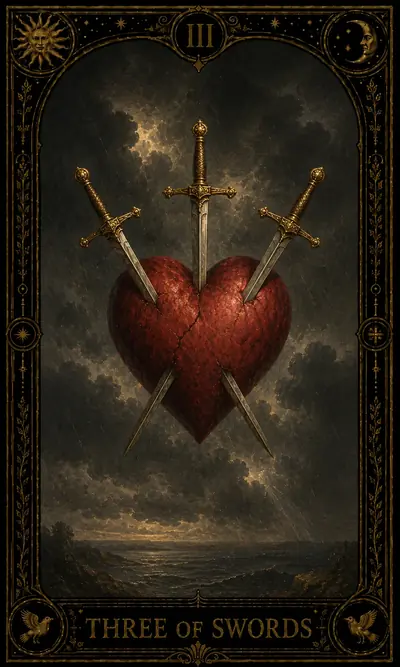
The Three of Swords shows a crimson heart pierced by three blades against a backdrop of rain and storm clouds, one of the most direct images in the deck. The archetype is honest pain, the moment truth cuts through illusion and leaves an exposed wound. It is a card of grief as process rather than punishment: suffering is acknowledged here rather than denied, and that acknowledgement is where healing begins.
Upright
The card speaks of heartache, rupture and bitter clarity, the moment when truth pierces illusion and leaves a wound. It is a season of grief, disappointment and parting, where sorrow arises not from weakness but from an honest acknowledgement of loss. On the inner level it marks the need to feel pain fully rather than suppress it, so that healing can finally begin. In relationships it shows betrayal, estrangement, a painful separation or words that cannot be unsaid. In matters of work it reflects collapsed hopes, a rejected plan or a decision that wounds yet reveals what is real.
In love
The card points to a breakup, betrayal or the bitter recognition that feelings no longer align. It often marks a painful but honest conversation after which illusions dissolve. The hurt is sharp but genuine, opening the way toward a more mature closeness later on.
Work & career
In work matters the card reflects a collapsed plan, a rejected proposal or disappointment in colleagues or leadership. Criticism may land like a blow, or a decision may wound pride even as it clarifies direction. An honest assessment of the situation proves more useful over time than comforting illusions.
Money & finances
Financially the card often reflects a loss, a failed deal or expenses tied to a separation. The disappointment may involve a partner or a venture invested with hope. The counsel is to assess the damage clearly rather than postpone a hard decision.
Health & wellbeing
On the physical level the card relates to stress-driven states - insomnia, low energy, a heaviness in the chest. Emotional pain that goes unacknowledged tends to surface in the body instead. Self-care during this period is a necessity rather than an indulgence.
The card’s advice
Allowing grief to run its course, without rushing the process or suppressing the tears, is essential. Honesty with oneself about the scale of the loss matters more than an outward show of composure. Leaning on others and letting time pass allows the wound to close naturally.
Reversed
In this position the card points to pain that is refused release, to lodged resentment and a prolonged grief that has hardened into habit. It is the shadow where the wound is guarded more tenderly than the cure, and old tears feed bitterness and mistrust. At times it shows the opposite, a numbness and denial, an effort not to feel rather than to mourn what was lost. In relationships it appears as unhealed reproach, jealousy and the wish to wound back, blocking any closeness. In work it brings paralysis after past failure, a fear of fresh injury that holds everything still.
In love
Reversed, the card can mark the start of forgiveness and healing from an old wound, or resentment nursed for years. It may show jealousy, an urge to retaliate against a former partner, or the opposite - numbness and a refusal to feel at all. The difference lies in whether healing has been chosen or pain is being clung to.
Work & career
In work it can mean recovering from a past failure and gradually rebuilding confidence after a setback. It can equally show paralysis rooted in old disappointment, a fear of repeating the mistake that blocks any fresh start. The key question is whether the old pain has been released or still dictates decisions.
Money & finances
Reversed, the card may show recovery after financial loss and a gradual mending of the damage. It can also point to a fixation on a past failed deal that clouds judgment about new opportunities. Distinguishing real risk from the echo of old fear matters here.
Health & wellbeing
The reversal reflects either relief after a period of stress or chronically suppressed emotion that keeps draining the body. Denied pain often surfaces as tension or fatigue without an obvious cause. Naming the feeling is the first step toward release.
The card’s advice
It is worth asking honestly whether the wound has truly been released or merely buried deeper. Forgiveness is not an obligation owed to others but an act of freeing oneself. As long as the grievance is guarded more carefully than the chance to heal, moving forward stays blocked.
Symbolism of the card
The crimson heart symbolizes love, emotional openness and attachment. Pierced through, it speaks of heartache, broken feelings and the inevitable grief that must be felt to heal.
The upright sword driven vertically through the heart's centre is the sharp truth or word that cut the deepest. It represents painful clarity - a reality too plain to ignore.
The blade entering at an angle from the left adds a second wound - betrayal, hurt or quarrel. The multiple swords show pain arriving from several directions at once.
The third sword piercing from the right completes the trio of wounds. Together the three blades form the image of conflict, separation and threefold sorrow at the card's core.
The heavy grey clouds behind the heart set a mood of gloom and emotional turmoil. They remind us that suffering is passing weather of the soul, not a permanent state.
The slanting lines of rain across the card are tears and cleansing. The downpour symbolizes released grief that ultimately washes clean and brings relief after weeping.
The card at a glance
Yes or no
Leans toward no, with an honest caveat: the card reflects pain and rupture rather than a favorable outcome, so the default answer tilts negative unless the question concerns healing after a loss.
Timing
Traditionally linked to a period of acute processing measured in weeks rather than days, the time it takes for pain to run its cycle. Seasonally it is sometimes associated with the cold, rainy months of autumn and winter, when sorrow and slowing down feel natural.
Astrology
The Three of Swords belongs to the element of Air, tied to thought, speech and perception, and in the decan system it is traditionally associated with Saturn in Libra. That pairing points to a painful yet sobering lesson about fairness, balance and the cost of honesty.
Combinations with other cards
Beside Cups cards the Three of Swords usually intensifies themes of heartbreak and emotional rupture. Next to the Tower or other Swords it can suggest a chain of shocks and painful revelations arriving together. Beside the Star or the Sun it softens, showing that healing has already begun beneath the grief.
Frequently asked questions
What does the Three of Swords mean in love?
It usually signals a breakup, betrayal or the painful recognition that feelings no longer match. The hurt is honest and exposing rather than a minor slight.
What does the Three of Swords mean reversed?
It can show either the start of healing and forgiveness after an old wound, or lingering resentment and a refusal to let go. The distinction depends on the surrounding context.
Is the Three of Swords a yes or no card?
It leans toward no, since the card centers on pain, rupture and disappointment rather than a favorable outcome.
Does the Three of Swords mean a breakup?
Yes, it is one of the deck's clearest images of separation and heartbreak, especially when tied to an honest but bitter recognition of the truth.