Ten of Swords
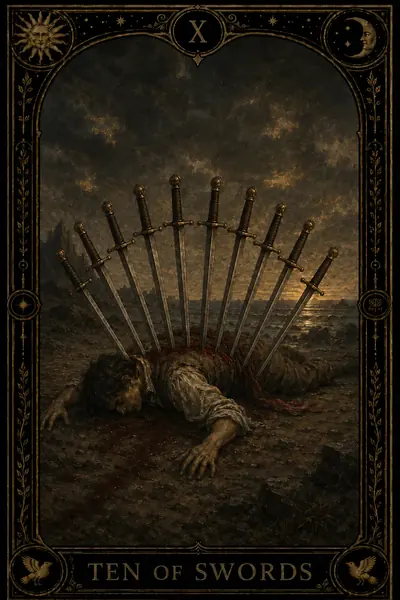
The Ten of Swords depicts a fallen figure pierced by ten blades beneath a black sky, while a band of golden dawn already breaks along the horizon. It is the archetype of absolute rock bottom: the card marks the point where pain reaches its limit and there is nowhere left to fall, which means the only direction left is up. Beneath the dramatic image lies not a curse but a promise that even the harshest cycle comes to an end.
Upright
The Ten of Swords speaks of an ending reached through pain: a cycle that sinks to its very bottom, where nothing remains to resist, and it is this finality that brings a strange relief. On the psychological level it marks the moment when the mind has exhausted itself in worry and self-undoing, the worst already having happened, leaving emptiness and a quiet dawn on the horizon. In relationships it is the image of a rupture or betrayal that dispels every illusion and closes what had long been broken. In matters of work it is the collapse of a plan, a defeat or forced surrender, after which only a fresh, if bitter, beginning remains.
In love
A relationship approaches a rupture or betrayal that strips away every illusion at once and replaces uncertainty with clarity. The pain is sharp but final: what had long been broken finally gets named and closed.
Work & career
A project, position or partnership collapses in a way that was hard to prevent and cannot be softened by half-measures. The defeat forces an open admission of failure and a fresh strategy built from the ground up.
Money & finances
Finances hit their lowest point — a loss, a major setback or the closing of an income source that cannot be explained away as temporary. This very finality creates the ground for an honest review of budget and goals.
Health & wellbeing
Body or mind signal exhaustion at the very limit of endurance, often after a long stretch of anxiety or overwork. The card points to a crisis that forces a genuine stop and real recovery.
The card’s advice
An ending is best acknowledged for what it is, without trying to hold onto what has already been destroyed. Letting go of the past opens space for a new beginning, however bitter the step may feel now.
Reversed
Reversed, the Ten of Swords describes a clinging to pain that should long since have ended: the wound refuses to close, and the drama is kept alive for the sake of suffering itself. It is the shadow of martyrdom, where the mind replays the catastrophe again and again, magnifies the blow and holds to the role of victim rather than letting go. In relationships it is the drawn-out agony of a parting, grievances that will not let the curtain fall, a fear of the final full stop. In matters of work it is resistance to an inevitable ending, a grip on a failing cause and an inability to see that the bottom has already passed and the rise is possible.
In love
A parting that should already have happened is postponed: partners cling to feelings that have faded or wear each other down with mutual grievances. The drama of the relationship is artificially prolonged, keeping the wound from closing.
Work & career
A failing project or a dead-end position is held onto out of stubbornness or fear of change, even as every sign points to an unavoidable end. Energy is spent resisting the obvious instead of seeking new paths.
Money & finances
A financial collapse has already happened or is inevitable, but the admission of loss is delayed by hopeless attempts to rescue a doomed venture. This extends the damage rather than stopping it in time.
Health & wellbeing
Recovery from illness or burnout moves slowly because reality is not being accepted, or, conversely, relief finally arrives after a long crisis. The card marks the boundary between staying stuck in suffering and taking the first steps toward healing.
The card’s advice
It helps to stop magnifying the blow and playing the victim once a period of pain has objectively run its course. Recognizing that the bottom has already passed frees the energy needed to rise.
Symbolism of the card
The face-down figure pierced by ten swords embodies utter defeat, ruin and rock bottom. It is a bitter but final ending: things cannot get worse, and the only way left is up.
Ten blades driven into the back signify an overload of pain, betrayal and a blow struck at the most vulnerable moment. Their excessive number borders on the absurd, hinting that the tragedy is overdramatized and will soon spend itself.
The crimson garment spilling like blood underscores the finality of loss and life-force poured out. Red is both the pain of suffering and a smouldering energy that may one day be reborn.
The pitch-black sky over the scene conveys gloom, despair and the darkest hour before dawn. It is the depth of a mental crisis in which all hope seems to fade.
The band of yellow light on the horizon is the card's chief glimmer of hope: even after total collapse a new day inevitably breaks. Darkness is not eternal, and the worst ending is followed by renewal.
The smooth, motionless sea behind the figure speaks of frozen emotions and the numbness that follows pain. This stillness is a pause in which feelings may finally settle and begin to heal.
The card at a glance
Yes or no
Leaning toward no: the card speaks of an ending, a defeat or the need to let go rather than a favorable outcome for what is being asked.
Timing
Traditionally tied to the closing phase of a cycle and often read as the end of winter — the moment just before dawn, when the ordeal is over but renewal has not yet visibly arrived.
Astrology
The Ten of Swords belongs to the element of Air and is associated with the Sun in Gemini, underscoring a mind pushed to its limit — mental exhaustion followed by clarifying light.
Combinations with other cards
Beside renewal cards such as the Sun or the Ace of Cups, the Ten of Swords reads as a clear sign that the hard chapter is over and recovery is beginning. Next to the Tower or other Swords it intensifies the theme of a sudden, painful break, while beside the Star it softens into an image of quiet hope after the storm.
Frequently asked questions
What does the Ten of Swords mean in love?
It usually points to a painful breakup or betrayal that ends every illusion and closes something that had long been broken. It is a harsh but final ending, after which an honest fresh start becomes possible.
What does the reversed Ten of Swords mean?
Reversed, it describes lingering pain that should already have ended and a reluctance to release the role of victim. It can also mark the first signs of recovery after a long crisis.
Is the Ten of Swords a yes or no card?
It leans toward no: the card is more often tied to an ending, a defeat or the need to let go than to a favorable answer.
What do the ten swords in the image symbolize?
The ten blades represent an overload of pain and a blow struck at the most vulnerable moment, though their excessive number hints that the tragedy is overdramatized and will soon spend itself. The golden dawn on the horizon balances the grim image with a promise of renewal.