Nine of Swords
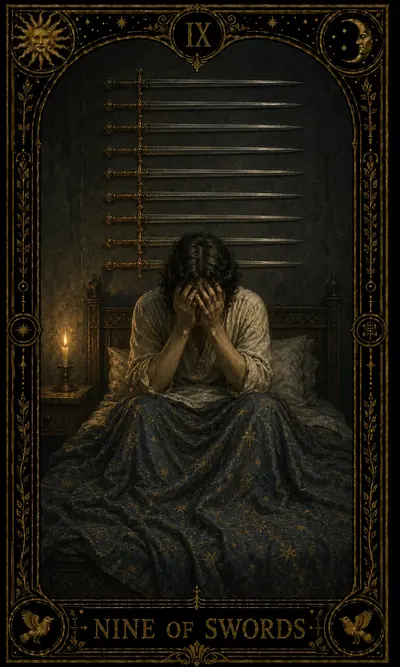
The Nine of Swords shows a figure waking in the night and covering the face with both hands beneath nine blades suspended in darkness. The card's archetype is a mind left alone with itself at the hour when no one can argue back against catastrophic thoughts, so anxiety grows faster than any real cause for it. It marks the ninth, near-final step of the suit of Swords - the peak of mental suffering just before resolution.
Upright
The Nine of Swords speaks of nocturnal dread that swells in the dark far beyond daylight reality: sleeplessness, gnawing guilt, and catastrophic scenarios replayed again and again. On the psychological level this is suffering born not of the event itself but of a mind that chews on fear; much of the pain here is inner and magnified. In relationships it surfaces as unspoken hurts, jealousy, and silent torment endured alone. In matters of work it is the weight of responsibility, shame over mistakes, and the fear of looming collapse that strips away all peace.
In love
Relationships carry unspoken tension: jealousy, hurt, and suspicion loop in solitude instead of surfacing in conversation. Often the issue is less an actual betrayal or breakup than a dread of the worst that poisons the nights more than the situation itself warrants.
Work & career
At work the card points to the weight of responsibility, fear of failing, and shame over past mistakes. Deadlines and reputation feel heavier than circumstances demand, and sleeplessness before a major decision dulls clear judgment.
Money & finances
Financial anxiety here tends to be exaggerated, with imagination painting debts and losses larger than the actual figures show. Checking the facts before giving in to panic about spending or losses is worthwhile.
Health & wellbeing
The card speaks directly to insomnia, nervous exhaustion, and psychosomatic strain such as headaches or tension born of chronic worry. The body pays the price when the mind refuses to release its thoughts even at night.
The card’s advice
Speaking the fear aloud - to oneself, a journal, or another person - serves better than carrying it alone. Separating the real threat from the imagined one restores clarity and, eventually, sleep.
Reversed
Reversed, the Nine of Swords describes suffering grown into a habit - a despair that turns in on itself and refuses to see a way out. It is the shadow of self-torment, where anxiety hardens into hopelessness and shame hides so deep it finds neither words nor aid. In relationships the card warns of isolation in which fears accumulate in silence and corrode the bond from within. In matters of work it is paralysis before imagined disaster, an inability to separate real threat from invented one, and the danger of sinking into a self-made prison of nightmares.
In love
Reversed, the card shows a relationship where fears have piled up so long they have become a silent wall between two people. It can mark either a moment of honest admission and relief, or the risk of final isolation if the conversation is postponed once more.
Work & career
Chronic burnout or paralysis before an imagined disaster blocks decision-making. At times this position also signals that the worst has passed and a first breath of relief is appearing after prolonged strain.
Money & finances
Financial fears either begin to loosen after a long stretch of worry, or harden into compulsive avoidance of the subject altogether. It matters not to mistake the wish to stop thinking about a problem for actually solving it.
Health & wellbeing
The card warns of prolonged anxiety or a depressive state that has become the background hum of daily life. At the same time it can mark the first relief - the moment sleepless nights begin to recede.
The card’s advice
Keeping the pain locked inside serves nothing; seeking outside support, whether from someone close or a professional, matters more. Recognizing that part of the fear is manufactured by the mind is the first step out of the loop.
Symbolism of the card
The figure sitting up and covering the face with both hands embodies anguish, insomnia and the torment of a guilty or frightened mind. This suffering is born in the head, not in reality — a nightmare that feels endless yet lives only in thought.
Nine blades hang horizontally against the black void, never piercing the sleeper — they represent obsessive thoughts and fears that wound only in the imagination. Their orderly row shows how anxiety multiplies in the darkness of the mind.
The impenetrable blackness behind the sleeper is the dark night of the soul, the hour of deepest despair and isolation. The darkness magnifies fear, yet reminds us that dawn has not yet come and the worst is lived only in the mind.
Carved into the side of the bed is a duel in which one figure strikes down another — an image of harm given or received. This relief points to past trauma or guilt that keeps sleep away.
The checkerboard quilt of roses and zodiacal signs blends love (roses) with destiny (planetary symbols), recalling forces larger than the present fear. It hints that comfort and meaning are near, if only the sleeper would lift their head.
The Roman numeral IX marks the ninth, near-final step of the suit of Swords — the climax of mental suffering before resolution. The nine signals that the crisis has peaked and a turning point is close.
The card at a glance
Yes or no
Leaning toward no: the card reflects a state of anxiety and imagined obstacles rather than a clear favorable outcome, so a decision is better postponed until the mind settles.
Timing
Traditionally tied to nighttime, a period of waiting, and often delay - the matter is live, but clarity arrives only once the anxiety subsides, typically within a few weeks.
Astrology
The card belongs to the element of Air, governing thought, mind, and inner dialogue. Within the suit of Swords' decan system it is linked to Mars in Gemini - a restless, combative mental energy.
Combinations with other cards
Next to Cups cards the theme of unspoken feeling and emotional isolation intensifies, while the Moon nearby underlines how illusory and exaggerated the fear has become. Lower-numbered Swords beside it point to the source of the conflict, while the Sun or the Star softens the anxiety, promising relief ahead.
Frequently asked questions
What does the Nine of Swords mean in love?
It points to unspoken hurt, jealousy, and anxious thoughts kept private instead of voiced openly between partners. Often the issue is less an actual crisis than fear outweighing the events themselves.
What does the Nine of Swords reversed mean?
Reversed, the card signals prolonged despair that has become habitual, or alternatively the first relief after a long stretch of anxiety. The key difference lies in willingness to speak the fear aloud.
Is the Nine of Swords a yes or no card?
Leaning toward no: the card reflects anxiety and mental obstacles rather than a favorable outcome, so important decisions are better delayed until the mind is calmer.
What does the Nine of Swords warn about in work and career?
It warns of stress, fear of failure, and sleeplessness before important decisions, all of which cloud a clear-eyed view of the problem's real scale.