Six of Swords
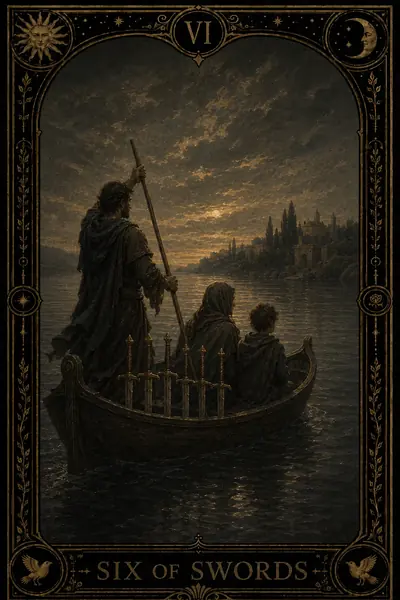
The Six of Swords shows a quiet crossing from turbulent water toward a calm shore, as a ferryman guides a boat carrying a cloaked figure and a child past six upright swords. The card's archetype is gradual healing and a deliberate departure from pain rather than an abrupt break. It is an image of movement that takes time, effort, and patience, yet steadily leads toward a more peaceful state.
Upright
The Six of Swords speaks of a quiet passage from turbulence toward calm, a movement away from what has wounded toward gentler shores. It is a card of gradual healing: the pain does not vanish at once, yet it is left behind as the boat slides slowly across still water. On the psychological level it marks acceptance of necessary change and a willingness to release the past without drama. In relationships it signals the cooling of storms and a passage into a more mature, peaceful bond, or a dignified parting. In matters of work the energy appears as the calm closing of a hard chapter and a cautious drift toward stability.
In love
A relationship enters a phase where sharp conflict cools into something calmer and more mature, or a couple parts ways gently and with dignity. Partners leave stormy arguments behind and learn to move in the same direction without unnecessary drama.
Work & career
The card points to the close of a difficult project or work chapter and a move toward steadier conditions, such as a change of department, office, or even city in search of calm. Progress is slow but steady, without sudden leaps.
Money & finances
The financial situation gradually evens out after a period of strain, though rapid abundance should not be expected. It makes sense to trim expenses and move toward stability through small, consistent steps.
Health & wellbeing
Body and mind are in a phase of recovery after stress or illness, with improvement arriving step by step rather than all at once. A change of scenery, fresh air, and a routine that lowers anxiety are helpful.
The card’s advice
It helps to allow a slow but certain departure from what has caused pain, without demanding instant relief. Trusting the process of transition matters more than looking back at the choppy waters left behind.
Reversed
Reversed, the Six of Swords speaks of being stranded between two shores, unable to make the crossing away from pain. It is resistance to change, a return to old wounds and to circles that ought to have been left behind. The shadow of the card is the baggage of the past dragging everything downward, and a fear that keeps the boat from moving at all. In relationships it appears as a parting drawn out too long or an unhealthy attachment that denies both people their peace. In matters of work the energy shows as postponing an inevitable transition, fleeing in circles, and an anxiety that hides the quiet harbor waiting ahead.
In love
A couple gets stuck between separating and trying to fix things, circling back again and again to the same old grievances. The parting drags on, and an unhealthy attachment keeps both people from moving forward.
Work & career
A necessary transition, such as a new position, a resignation, or a move, keeps getting postponed out of fear of the unknown. The person keeps working in the same uncomfortable circumstances, unwilling to take the step toward change.
Money & finances
Financial trouble repeats in cycles because old habits and decisions are never reconsidered. Attempts to escape a difficult situation stall until a real decision is made to change course.
Health & wellbeing
Recovery stalls or slides backward: stress returns and old complaints resurface. Body and mind are signaling that the needed change in lifestyle has not actually been made.
The card’s advice
It matters to look honestly at what is keeping things in place and to stop fearing the crossing itself. Releasing the emotional baggage of the past is necessary, or the quiet harbor ahead will remain out of reach.
Symbolism of the card
The standing poleman is the guide and the very act of transition: he calmly steers the boat, carrying his passengers from troubled waters toward calmer ones. He embodies movement away from hardship toward healing.
The long pole the ferryman pushes against the riverbed signals gradual, controlled progress through shallow water. It is the steady effort of will that moves the boat forward step by step, not a sudden leap.
The hunched, cloaked figure carries the sorrow and emotional burden taken along on the journey. It reminds us that moving on does not erase pain at once, but carries it toward a place where it can finally settle.
The small figure beside the adult speaks of vulnerability, care, and the future for whose sake the crossing is made. The journey is not taken alone or for oneself only, but for those being protected.
The six swords planted upright in the boat are the unresolved thoughts and past wounds the travellers carry along. They stand still and do no harm now that the pain is contained, yet their memory rides alongside.
The smooth water ahead and the distant shore promise arrival at a more peaceful place. Its contrast with the choppy ripples at the stern reveals the card's direction itself: from turmoil toward calm.
The restless ripples by the right side and stern mark the waters the boat is leaving behind. These waves are the difficulties left in the past, the emotional storm the travellers are sailing away from toward quieter shores.
The card at a glance
Yes or no
Leaning toward yes, with patience required: the card promises movement toward better circumstances, but gradually rather than immediately.
Timing
Traditionally tied to a gradual, drawn-out process measured in weeks or months rather than days. It is associated with autumn and transitional seasons, when one state slowly gives way to another.
Astrology
The card belongs to the element of Air, governing thought, reason, and communication, and in some systems is linked to Mercury in Aquarius, blending intellect with movement toward the new. This underscores the rational, rather than purely emotional, character of the transition.
Combinations with other cards
Beside cups cards, the Six of Swords amplifies themes of emotional healing and gentle farewell, while neighboring the Tower or Death suggests the crossing became possible only because a crisis has run its course. Paired with wands cards it speeds movement forward, while sitting among reversed swords cards it intensifies the motif of being trapped in anxious thought.
Frequently asked questions
What does the Six of Swords mean in love?
It signals a move from conflict toward calmer, more mature ground in a relationship, or a gentle, dignified parting.
What does the Six of Swords mean reversed?
Reversed, it points to being stuck in the past, resisting change, and being unable to leave a painful situation behind.
Is the Six of Swords a yes or no card?
It leans toward yes, but with the expectation that improvement will come gradually rather than instantly.
What do the swords in the boat represent?
The six upright swords represent unresolved thoughts and past wounds the travelers carry along, though they no longer cause harm.