Five of Pentacles
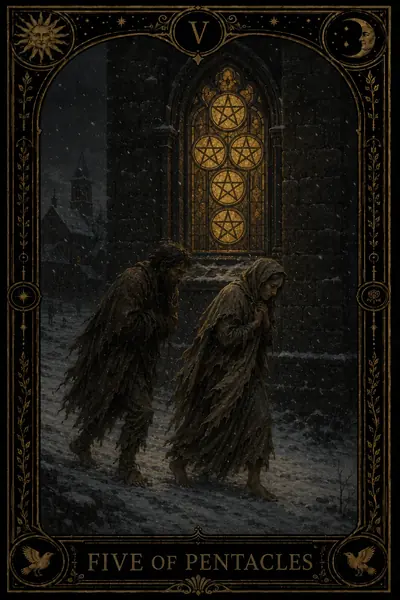
The Five of Pentacles shows two wanderers walking barefoot through the snow past a glowing church window set with five golden stars. The archetype is the experience of want and exile, when help lies close by yet feels out of reach behind pain, pride, or exhaustion. It is an image of a material or spiritual winter that must be crossed before the light is noticed again.
Upright
The Five of Pentacles speaks of a season of want and loss, of standing out in the cold beyond a lit and glowing window that neither pride nor circumstance will let one enter. It marks a stretch of material or spiritual depletion, when the chill outside feels total and the help close at hand goes unseen, obscured by exhaustion and by fixation on the wound. On the inner plane the card reveals a sense of abandonment and a belief in one's own exclusion that often runs deeper than the hardship itself. In relationships it tests loyalty amid scarcity, a shared burden that either draws two closer or pulls them apart. In matters of work it brings shortfalls, setbacks, and a tightening of belts while support waits unrecognised nearby.
In love
A relationship is tested by shared hardship, whether money troubles, illness, or a growing sense of estrangement from those who matter most.
Work & career
Work brings the risk of setbacks, layoffs, or a feeling that effort goes unseen and unsupported by those in charge.
Money & finances
Finances run short, forcing cutbacks and stirring anxiety about what tomorrow will bring.
Health & wellbeing
Energy runs low and an old complaint may flare up, calling for rest and proper treatment rather than being ignored.
The card’s advice
Acknowledging the hardship and looking around for help serves better than carrying the burden alone in the belief that no support exists.
Reversed
Reversed, the Five of Pentacles marks the breaking of the cold spell: the end of a hard passage, recovery, the return of solid ground, and a helping hand that can at last be accepted. Yet the same shadow may signal becoming stuck in the role of the outcast long after the need has passed, when habit of complaint and mistrust lingers and aid is stubbornly refused. The card warns of false pride that forbids asking, and of a spiritual poverty hidden behind outward plenty. In relationships it shows either reconciliation after the frost or a prolonged clinging to grievance. In work it brings either slow restoration or a refusal to see the exit standing close at hand.
In love
The reversed card points to reconciliation after a cold spell and a renewed willingness to accept a partner's care once resentment is set down.
Work & career
Relief follows a difficult stretch as new work appears, stability returns, or colleagues finally offer the assistance that was needed.
Money & finances
The financial picture slowly improves and debts begin to shrink, provided the habit of constant worry is allowed to loosen.
Health & wellbeing
Recovery and strength return, though the card can also warn of clinging to the identity of the sufferer even after the crisis has actually passed.
The card’s advice
Allowing help to be received and stepping out of the role of the outcast matters more than holding on to old grievance out of habit.
Symbolism of the card
The lit church window with five pentacles symbolizes spiritual refuge and material abundance that lies just within reach. The wanderers pass by, unaware of the aid that is always available to them.
Five golden stars arranged in a tree-of-life pattern in the glass mean that true wealth is spiritual and available to those who choose to enter. They remind us that lack is often only a state of mind.
The crippled man on crutches with a bandaged leg embodies physical hardship, illness and want. He stares downward, absorbed in his suffering, never lifting his eyes to the light above.
The wooden crutches underscore disability and dependence, the inability to walk one's own path unaided. They speak of frailty and the burdens that drag a person toward the ground.
The woman wrapped in a tattered cloak, walking barefoot through snow, personifies endurance and companionship in adversity. Together the two wanderers share the cold of exile yet sustain one another.
The white snow beneath their bare feet conveys harshness, poverty and a spiritual winter. It is an image of a temporary season of deprivation that must be crossed before warmth returns.
The card at a glance
Yes or no
Leaning toward no: the card describes a shortage of resources and support in the moment, so a favorable outcome is unlikely.
Timing
Traditionally tied to winter and to a slow, heavy pace of events, often signaling a trial that stretches across several months.
Astrology
The card belongs to the element of Earth and, within the minor arcana system, is associated with Mercury in Taurus, underscoring the practical, grounded nature of its trials.
Combinations with other cards
Beside cards of Swords it sharpens anxiety and mental strain, while cards of Cups nearby soften material want with emotional support from others. Paired with further Pentacles, especially the Ten or the Three, it points toward a gradual recovery through work and shared effort.
Frequently asked questions
What does the Five of Pentacles mean in love?
It signals that a relationship is being tested by shared hardship and a sense of estrangement, calling for support rather than withdrawal from one another.
What does the reversed Five of Pentacles mean?
Reversed, it marks the end of a difficult passage and openness to receiving help, though it can also show getting stuck in the role of the victim.
Is the Five of Pentacles a yes or no card?
It leans toward no, since it describes a period of scarce resources and unfavorable conditions.
What does this card warn about financially?
It warns of likely losses, forced economizing, and the need for a sober review of spending.