Ten of Pentacles
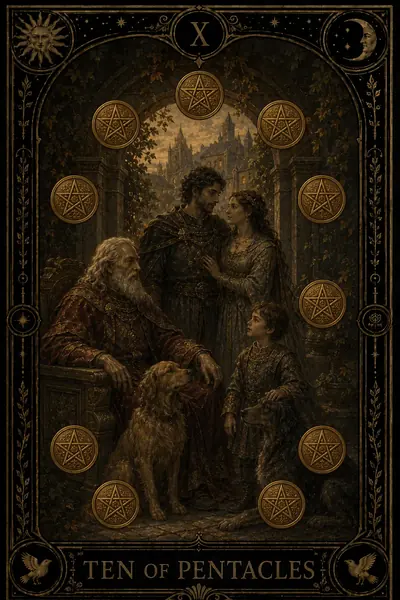
The Ten of Pentacles closes the suit of earth with an image of an ancestral estate, where an elder, a couple, a child and two dogs gather beneath a stone archway into a single picture of prosperity. Ten coins arranged in the pattern of the Tree of Life point to abundance that has reached completion and become shared family property. It is the archetype of legacy: something built not for one person but for those who come after.
Upright
The Ten of Pentacles speaks of mature abundance that reaches beyond a single life: a solid home, inheritance, lineage and wealth gathered to last. It is the energy of a completed cycle, where personal success becomes a foundation for family and generations to come, and values are handed down like treasure. Psychologically it reflects belonging, deep rootedness and a quiet sense of security. In relationships it is a bond blessed by family, shared roots and lasting commitment; in matters of work, a stable enterprise, ancestral capital and tradition that yields dependable fruit.
In love
The bond takes on the shape of family in a broad sense, rooted in shared history, supported by relatives and meant to last.
Work & career
Work is tied to a stable enterprise, a family business or an established structure that values experience and loyalty to tradition.
Money & finances
The financial picture is solid and built up over years, often reinforced by property, inheritance or shared family capital.
Health & wellbeing
Overall condition stays steady thanks to an established way of life, though the card points to the weight of inherited habits and family patterns.
The card’s advice
It helps to rely on tested connections and invest in what will outlast the present moment — a home, a relationship, or a venture meant to be passed on.
Reversed
Reversed, the Ten of Pentacles exposes the shadow of abundance: quarrels over inheritance, fractured family ties, the fragility of what seemed eternal. Here wealth loses its meaning, turning into a weight of traditions and expectations that suffocates rather than nourishes. Psychologically it marks a fear of losing one's footing, a clinging to status, or conflict between duty to one's lineage and one's own path. In relationships it brings family pressure, disputes over money and an absence of true closeness behind a prosperous façade; in matters of work, financial instability, collapsing ventures and a false security that fails the test.
In love
The relationship comes under pressure from relatives, and disagreements over money or roles wear down closeness between partners.
Work & career
A family business or long-standing structure develops cracks: generational conflict, a struggle for control, and a loss of former stability.
Money & finances
Disputes arise over inheritance, property division or shared budgets, and the visible prosperity proves less secure than it appeared.
Health & wellbeing
Accumulated tension and long-held family habits may weigh on wellbeing, calling for a review of inherited patterns.
The card’s advice
It is worth separating genuine support from imposed expectations and sorting out which part of the legacy truly serves and which one weighs down.
Symbolism of the card
The white-bearded elder in his richly embroidered robe embodies a completed life, accumulated family wealth, and the wisdom passed down to the generations that follow.
The dogs nuzzling the patriarch signify loyalty, domestic comfort, and protection of the lineage; they belong to the household and trust their elder.
The man and woman standing together represent the marital union, continuation of the bloodline, and the partnership on which the household's prosperity rests.
The child reaching toward the dog embodies the heir and the family's future — the innocence of a new generation for whom the lasting legacy is built.
The stone archway and tower depict the ancestral estate, the gateway to a secure home; a symbol of stability, protection, and inherited property.
The heraldic scales and towers woven into the cloak speak of the family crest, the honour of the house, and the just stewardship of accumulated wealth.
The ten coins arranged in the pattern of the Kabbalistic Tree of Life signify the fullness of material abundance, enduring wealth, and a spiritual blessing that permeates the entire family's life.
The card at a glance
Yes or no
Leans toward yes when the question concerns long-term stability and family matters; in conflict-driven questions it shifts toward "it depends on the willingness to agree on shared property."
Timing
Traditionally tied to long timeframes — years rather than days — since the card speaks of accumulation rather than a quick outcome; it is sometimes associated with autumn as a season of harvest.
Astrology
Corresponds to the element of Earth and to Mercury in Virgo, underscoring practicality, attention to detail and care for the everyday order of the household.
Combinations with other cards
Beside Cups cards it strengthens the theme of family warmth and emotional rootedness, while next to Swords it can point to legal questions of inheritance. Among other Pentacles it emphasizes material stability and the continuity of capital.
Frequently asked questions
What does the Ten of Pentacles mean in love?
It points to a serious, long-term relationship, often approved by family, or to marriage and a shared household; reversed, it signals family pressure or disputes over money.
What does the Ten of Pentacles mean reversed?
The card speaks of family conflict, inheritance disputes and the loss of a stability that once seemed solid.
Is the Ten of Pentacles a yes or no card?
Overall it leans toward yes for questions about stability and long-term investment, but shifts toward "depends on compromise" where family disagreement is involved.
What does the Ten of Pentacles say about money?
It points to accumulated wealth, property or inheritance, while the reversed position warns of financial disputes within the family.